
Hatef Bokaei Khelejan
I am a PhD student in Advanced Materials and Nanosciences at CEITEC Brno University of Technology. My work is related to biosensors, electrochemistry and nanomaterials. During my PhD, I have been working on different ways to make sensing methods simpler and more practical, especially when conventional laboratory instruments are not available. For the Falling Walls Lab, I will present my work on BPA detection using a standard glucose meter. The idea is to use a device that is already cheap and widely available for detecting something it was not originally designed to measure.

Mehrdad Mirzaei
We all know we’re supposed to wear sunscreen, but have you ever wondered what it actually does to your skin once it’s rubbed in? I’m a pharmacist-turned-researcher on a mission to answer exactly that. As a Ph.D. candidate in the Skin Barrier Research Group at Charles University, I look at the microscopic world of our body's first line of defense. I investigate how the active ingredients in everyday sunscreens interact with our skin's natural barrier at a molecular level. My goal is to bridge the gap between complex lipid biophysics and the SPF you grab off the shelf, helping to design the next generation of safer, smarter skincare.

Magda Nechanická
I have spent my whole academic life in one place. I studied nanomaterials at the Technical University of Liberec, from my bachelor's degree through to my PhD, which I finished in 2024, and I have worked at the university's Institute for Nanomaterials, Advanced Technologies and Innovation since 2017.
My research brings together two fields that rarely meet. I use nanomaterials to develop better ways to treat water and wastewater, and molecular genetics to find out what is actually living in them. Most of my work runs alongside water utilities and biotechnology companies, so the results have to work outside the laboratory, not only inside it. I have spent research stays in Spain and Thailand, and I have led two national research projects. Staying in one place has never meant working only with people from it. Doctoral students from across the world have spent years in our labs, and many of my projects run with partners abroad.
I travel as much as I can, and somewhere along the way it stopped being only about the culture. Now I notice the water everywhere I go. Can you drink from the tap here, and if not, what do people do instead? Every place solves the same problem in a different way.

Jana Kurcová
Three years of working as a café manager after high school graduation may not seem like the obvious beginning of a scientific career, but for Jana Kurcová, it was the path that led her back to academia and the realisation of her true passion for science (coffee is number two). Trained as a molecular biologist, driven by nanomedicine. From her first days at university, Jana has discovered a fascinating world of the smallest wonders – nanoparticles – and has never stopped exploring their possibilities. Currently, Jana is pursuing a PhD in Biological Chemistry at Mendel University in Brno, working at the intersection of bioorthogonal chemistry, nanotechnology and cancer biology. Her research explores palladium-based bioorthogonal nanozymes that act as catalytic switches, activating anticancer prodrugs only where they are needed, aiming to make chemotherapy more precise and less toxic. Alongside her research, she is passionate about bringing together ideas from different disciplines, mentoring others, and turning fundamental chemical concepts into technologies with the potential to improve medicine. Her research and academic work have been supported by a PhD Talent Brno scholarship.

Magdaléna Malásková
I’m a PhD candidate in Biological Chemistry at Mendel University in Brno. During my master’s studies, I discovered the fascinating world of lipid-based nanoparticles and their potential to improve the way medicines are delivered in the body. Today, my research focuses on solid lipid nanoparticles, tiny carriers that can protect therapeutic compounds and help transport them to one of the most difficult destinations in the human body: the brain. I investigate how their composition and surface properties influence their behaviour, with the ultimate goal of overcoming the highly selective blood–brain barrier. Beyond my own research, I enjoy mentoring students and sharing my enthusiasm for science with the next generation of researchers.

Aleksei Pashchenko
Aleksei Pashchenko, MD, PhD, is a physician and biomedical researcher at the Department of Biophysics, Second Faculty of Medicine, Charles University in Prague. He completed a cotutelle PhD at Charles University and the University of Sassari, focusing on bionanosensors for early theranostic applications. Alongside his research, he is training in Family Medicine, bridging biomedical science with everyday clinical practice. His research focuses on ultrasensitive bionanosensors, early disease detection, and translational technologies, as theragnostics, that could bring advanced diagnostics closer to the point of care.

Alexander Joy Panjikkaran
My scientific journey began with chemistry and hydrochemistry in India, where I developed an interest in how chemical processes shape the environment. Today, I am a PhD student at Charles University in Prague and the Institute of Chemical Process Fundamentals (ICPF) of the Czech Academy of Sciences (CAS), where I conduct my research in the ICPF Research Group of Aerosol Chemistry and Physics.
My research focuses on metals in atmospheric aerosols and the sources of air pollution. Although air pollution is often invisible, airborne particles carry chemical fingerprints that can reveal where they come from and how far they have travelled. My work connects detailed chemical analysis with real-world environmental challenges. I believe that understanding the air around us is essential for protecting the atmospheric environment and improving the quality of life.

Patrik Lindovský
I am a biochemist specializing in Medical Applications. During my master's studies at Brno University of Technology, I also worked at Teva Czech Industries, where hands-on experience in pharmaceutical development inspired me to pursue a PhD focused on improving drug delivery. This led me to the ERC-funded group of Prof. Robert Vácha at CEITEC, Masaryk University, where my work focuses on developing next-generation drug delivery systems that help medicines reach their targets inside the cell. In 2025, I completed the Life Science Transfer Academy at JIC, pitching a biotechnology innovation to investors for the first time. In 2026, I was awarded the Brno Ph.D. Talent Scholarship to carry my research forward. My goal is to build technology that makes treatments more effective and far less toxic, and leads to better patient outcomes.

Petr Sysel
Petr Sysel is a computer science teacher and a graduate of the Faculty of Education at Charles University in Prague. His work focuses on teaching algorithmic thinking and exploring how digital technologies can help students develop problem-solving skills.
He is the creator of Kodeon, an online learning environment developed in close connection with real-world computer science teaching. Kodeon enables teachers to create their own algorithmic and logical tasks, adapt them to the needs of individual classes, and monitor students’ progress. The project builds on Codeblockie, a prototype Petr developed during his bachelor’s studies. Both projects have received awards at Czech and Czech-Slovak student research competitions and conferences.
Today, Kodeon is used in both primary and secondary schools, as well as in the training of future computer science teachers at the Faculty of Education, Charles University. Petr’s goal is to explore ways of teaching students not only to understand digital technologies, but above all to think about problems, find their own solutions, and learn from mistakes.

Radek Páleník
Radek Páleník is a deep-tech entrepreneur and researcher working at the intersection of structural mechanics, high-performance computing, and quantum technologies. Currently finishing his Ph.D. in Applied Mechanics at VSB – Technical University of Ostrava, he recently co-founded the deep-tech startup Quantum4Simulations, where he leads product development.
His academic foundation is backed by regional and university recognition, including a winning lightweight design for a Formula Student accelerator pedal. Radek spent over five years as an algorithm developer at the IT4Innovations National Supercomputing Center, where he designed the co-rotational module for ESPRESO, an open-source, massively parallel solver.
Driven by a mission to translate academic breakthroughs into industrial impact, Radek co-founded Quantum4Simulations to revolutionize generative design. His team develops quantum-powered software that enables automotive and aerospace engineers to design lightweight, manufacture-ready components up to 100x faster, radically reducing development cycles, material costs, and carbon emissions.

Marie Vestenická
I am a PhD candidate at Charles University in Prague, where I bridge mathema:cs, history, and digital humanities. In my research, I analyze the French correspondence between Vito Volterra and Bohuslav Hostinský across archives in Rome, Paris, and Brno to trace the origins of functional analysis. Building on these historical archives, I am developing an interactive web platform featuring visual maps of mathematicians and historical narratives. I believe the history of mathematics is a powerful learning tool. By revealing how concepts actually originated, we can help students understand complex topics ranging from fundamental functions to the product integral through the human stories behind the formulas.

Lucia Peláková
I have always loved maps. Not just for showing where things are, but for revealing connections that might otherwise remain hidden. A WHO map does more than show where diseases occur. It can show links between public health and the social, economic, and environmental conditions in which people live. For me, maps became a way of understanding how place and circumstance can shape people’s lives.
Travelling taught me to look beyond those patterns to the people behind them. Learning from the experiences generously shared by people living in very different circumstances from my own gave me a personal appreciation of the complex relationships between health, living conditions, and community. It also drew me towards infectious disease research and its potential to impact wellbeing globally.
I trained as a pharmacist before bringing my knowledge of chemistry to a PhD in Microbiology at the Faculty of Medicine in Pilsen, Charles University, where I develop diagnostic tests for infectious diseases. My research today continues the same fascination I’ve always had, just now on the molecular scale: mapping how environment shapes disease. I hope to turn those connections into useful interventions that will improve global health and quality of life.

Jakub Koníček
Jakub Koníček is an Assistant Professor in the Department of Geoinformatics at the Faculty of Science, Palacký University Olomouc. His expertise includes Geographic Information Systems (GIS), digital cartography, and visual communication. He specializes in geovisualization, data visualization, infographics, and visual storytelling across various interdisciplinary fields. His current research goals focus on strengthening interdisciplinary research through the use of open data to develop practical, data-driven solutions and outputs that can improve the efficiency, quality, and sustainability of everyday life and the environments in which we live.
Klára Ženožičková
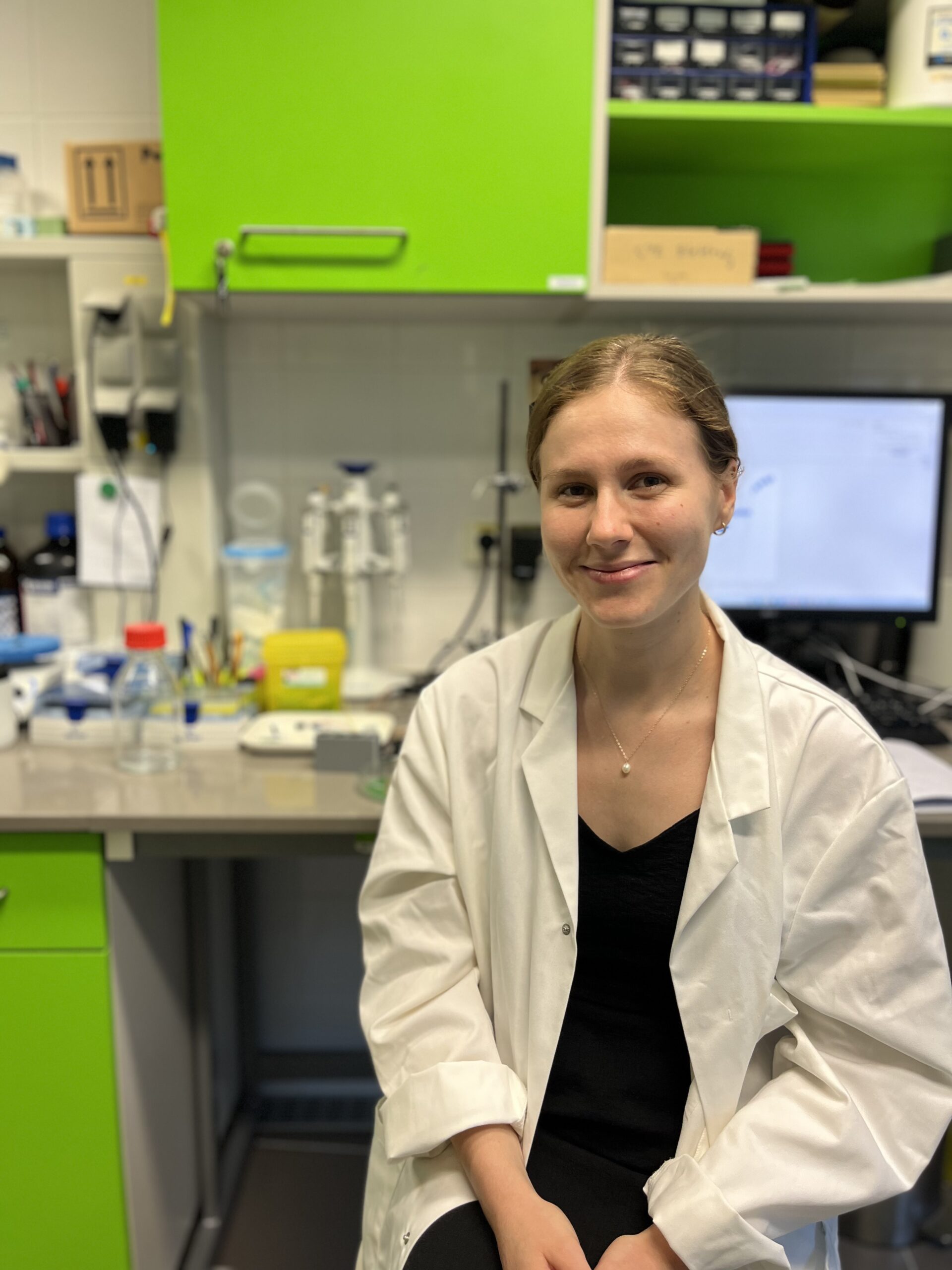
As a PhD candidate in Life Science at CEITEC Masaryk University, I focus on wearable electrochemical biosensors for sports diagnostics. Alongside my research, I enjoy bringing together ideas and people from different fields and learning more about validating the business case and strategy through the JIC Applied Program.
I develop ActoPatch, a non-invasive wearable patch that continuously monitors sweat metabolites such as lactate and glucose in real time. By combining a reusable analyzer with low-cost disposable patches and our app that tracks fitness trends, ActoPatch offers athletes, coaches, soldiers and emergency responders an affordable and flexible alternative to lab diagnostics. It helps prevent overtraining and metabolic stress before they happen.
Jan Žižka
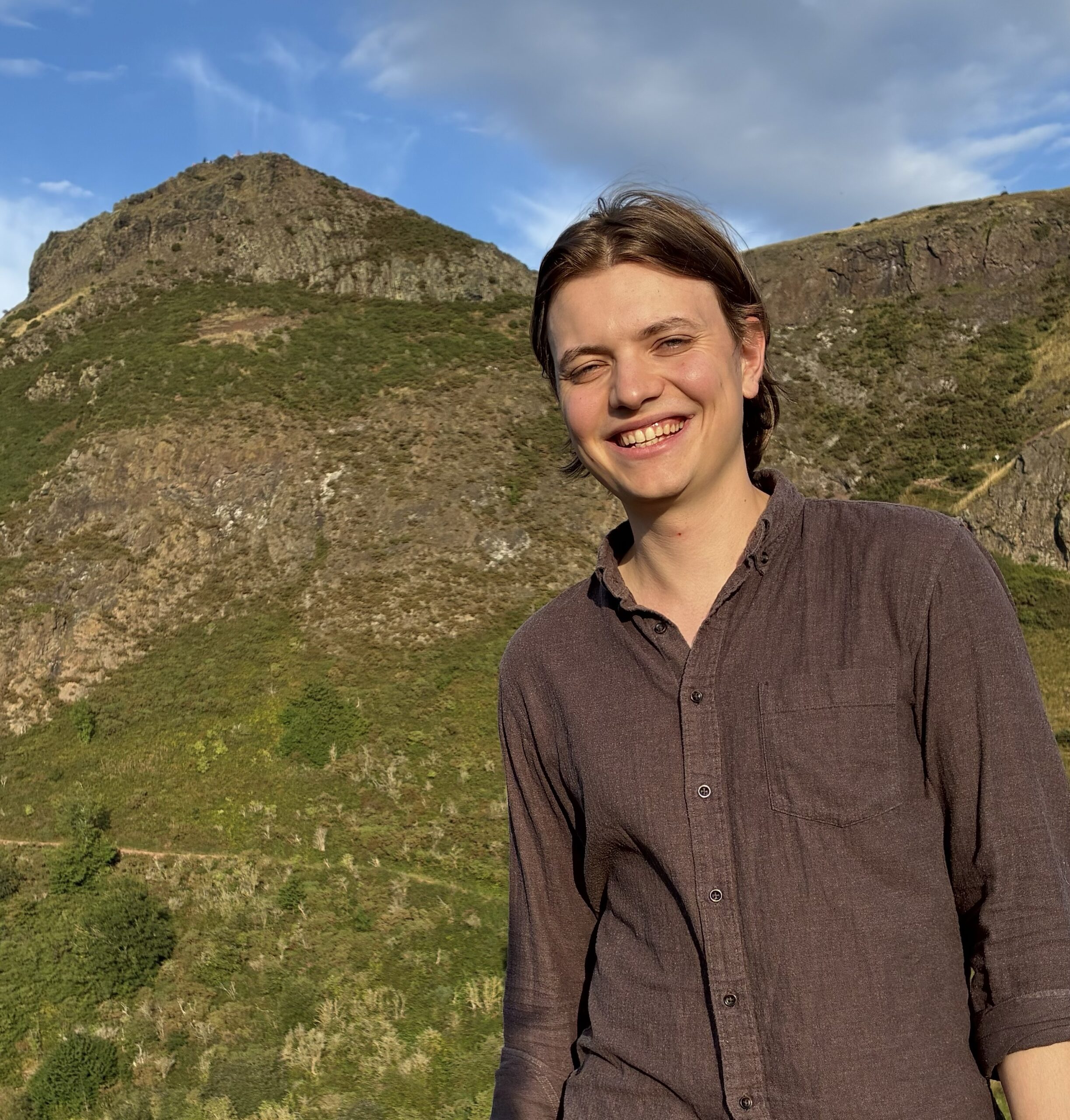
Jan is a science journalist. At Czech Radio, he focuses on interviews with globally renowned scientists. He has interviewed Nobel laureates, experts from NASA and the Council on Foreign Relations, as well as dozens of academics from leading universities worldwide. Last year, he joined the teaching team at the University of Edinburgh, where he studied and later contributed to research. Honza’s background spans political science, philosophy, physics, and law. He’s also a musician. He believes that while science is a rigorous, detail-oriented endeavour, it can also be profoundly human: a means of addressing the pressing issues we care about and helping young people develop their creative and intellectual potential.